
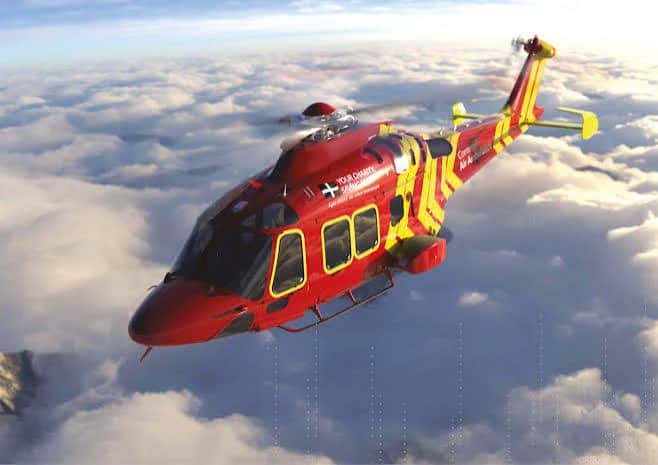
The client is a large, high-profile regional charity, saving lives across its region since 1987, when it became the UK’s first dedicated air ambulance service. Its crews are airborne within minutes of a call and can reach almost anywhere in the region in around twelve minutes, delivering the kind of critical care normally only available in a hospital emergency department, at the roadside, on a clifftop or in a field. It has now flown more than 32,000 missions, receives no government funding, and relies entirely on public donations to raise the £9 million a year it costs to keep two helicopters in the air. Every mission puts a mixed crew of a pilot and either two critical care paramedics, or a paramedic and a doctor, into a three-person team that has to make life-or-death decisions together, at speed, often in the most difficult conditions imaginable. Few organisations ask more of the trust, judgement and communication between colleagues than this one does.
Business need
That same intensity is what makes operations teams like these hard to lead. Pilots, doctors and paramedics come from three distinct professional cultures, each with its own hierarchy and its own instincts about who gets to speak up and when. In high-stakes, safety-critical settings, that can quietly harden into a steep ‘authority gradient’ — the same dynamic that has caused avoidable accidents in aviation and healthcare alike, where someone spots a problem but doesn’t feel able to say so. The charity wanted its operations teams to close that gap: to build a culture where every voice, regardless of rank or role, would be heard the moment something didn’t look or feel right, and where issues, near-misses and mistakes surfaced fast rather than festering.
What was delivered
Working with the charity’s operations teams between August 2024 and May 2025, we built a programme around one central idea: teams only sustain high performance if they are safe, then happy, then fast — in that order. In practice, this meant:
- Rebuilding the team’s shared values as observable, everyday behaviours rather than abstract slogans, and embedding them through ‘team maintenance’ conversations in regular meetings and operational (hot) debriefs, on the basis that values are tested in a crisis and so must be rehearsed while the sun is shining.
- Making the case for psychological safety and ‘fast honesty’ as the foundation of a high-performing team, using Amy Edmondson’s and Google’s research on why the best teams aren’t the ones that make the fewest mistakes, but the ones that surface and learn from them quickest.
- Clarifying what leaders themselves needed to do to make this real, using a simple five-step framework — Explain, Expect, Example, Encourage, Enforce — and guarding against psychological safety being weaponised to avoid accountability rather than build it.
- Introducing the science of habit change (neuroplasticity) and Steve Peters’ ‘Chimp Management’ model, giving individuals practical language for managing the fear and vulnerability that come with changing long-held habits and beliefs under pressure.
- Reinforcing the ‘fair process’ for reporting issues and near-misses, and creating an informal operations leadership group — two senior pilots, two senior doctors and two senior paramedics — to own the culture going forward.
- Equipping every team member with a practical toolkit including: self-awareness and how to invite and respond to feedback; how to exchange expectations; how to run an effective debrief; empathic listening; and structured ways to challenge in the moment.
Outcomes
Impact on key team metrics was measured before, during and after the programme. Overall scores rose from 4.8 to 7.2 — a 50% improvement — with the sharpest gains exactly where they were needed most: psychological safety nearly doubled, up 97%, and scores for learning and interdependence rose by 71% and 66% respectively. All three professional groups — pilots, doctors and critical care paramedics — improved, with doctors’ and paramedics’ scores rising most. Qualitatively, teams reported markedly better communication, greater openness to feedback, and a real shift in the quality and honesty of reporting and debriefs — the everyday behaviours that, in this line of work, keep both crews and patients safe.
“Mission Performance started with a single sub-team, carefully reading a challenging team dynamic and offering vital insights and simple tools that helped us look after ourselves and work effectively again. Crucially, they equipped us to sustain that progress after the programme ended. The work has since extended to our leadership and executive teams, driving valuable learning and change across the organisation. Their tailored approach is backed by real credibility in safety-critical fields.”
— Senior Doctor
| Metric | Aug ’24 | Nov ’24 | Feb ’25 | May ’25 | Change | % improvement |
|---|---|---|---|---|---|---|
| OVERALL | 4.8 | 5.8 | 5.9 | 7.2 | +2.4 | 50% |
| Clarity | 5.6 | 6.1 | 6.3 | 7.5 | +1.9 | 34% |
| Culture | 4.9 | 5.6 | 5.8 | 7.0 | +2.1 | 43% |
| Interdependence | 4.4 | 5.5 | 5.9 | 7.3 | +2.9 | 66% |
| Learning | 4.1 | 5.6 | 5.7 | 7.0 | +2.9 | 71% |
| Psychological Safety | 3.7 | 5.3 | 6.0 | 7.3 | +3.6 | 97% |
| Critical Care Paramedics | 3.9 | 5.7 | 5.3 | 6.3 | +2.4 | 62% |
| Doctors | 6.0 | 6.3 | 5.9 | 8.0 | +2.0 | 33% |
| Pilots | – | – | 6.8 | 7.6 | +0.8 | 12% |