


Consulting Director ·
Part 4: Making honesty fast, and keeping it fast
Agreeing how a team will behave is the easy part. The hard part is still behaving that way eight months later, under pressure, when nobody is watching. This part covers the components that keep a team honest with itself and keep its agreements alive: Team Maintenance, feedback skills, an understanding of how habits actually form, structured reviews, a shared idea of commitment, and a few practical tools. The thread running through all of them is speed. Most teams get to the truth eventually. The goal is to get there fast.
Team Maintenance
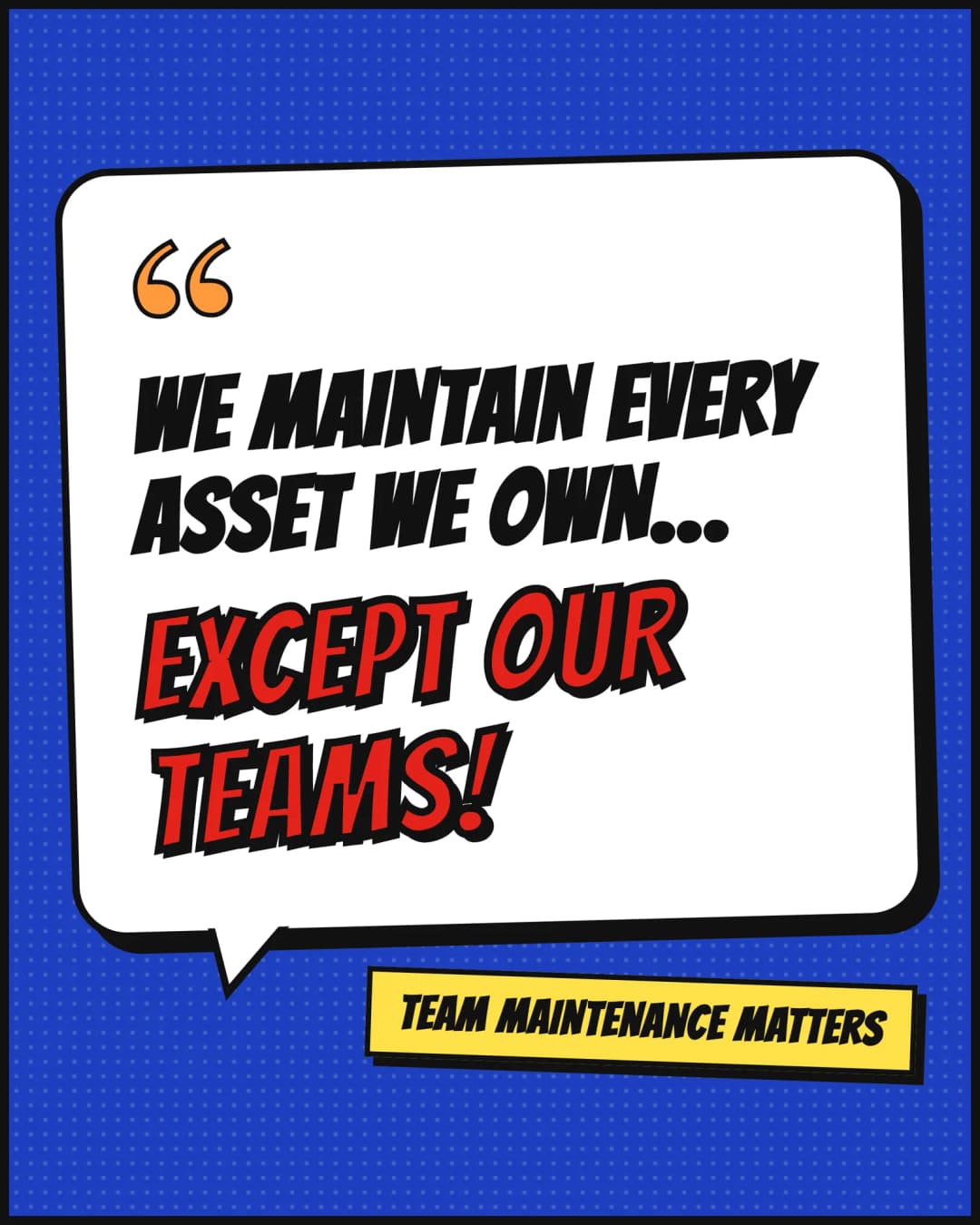
Start with Team Maintenance, which is the single most important habit in the whole programme. A senior leadership team is a strategic asset. We maintain every other asset we own: the machinery, the software, the buildings. Yet we do not maintain teams. We assume a strong, cohesive team will somehow magic itself into existence and stay that way. Team Maintenance is the correction. At least once a month, the team presses pause and has an honest conversation about one question: how are we working as a team? It is not a review of plans or targets. It is about how we collaborate. It is anchored in the Code of Conduct and the team’s values, and it is kept deliberately simple. Which of our behaviours are we living well? On which are we letting ourselves down? It can take as little as twenty to twenty-five minutes. Little and often is the whole point. Where a team is not yet ready for full candour, an anonymous polling tool can surface the truth in the moment, and AI can help track the themes over time.
Why it works
Why does it work? Publishing values does not embed them: an MIT Sloan Management Review analysis of more than 500 large companies found no correlation between the values a company puts in its official statements and how well employees say it lives them. What seems to matter is how often and how honestly the values are talked about in day-to-day work. Gallup finds engagement rises sharply when leaders give feedback several times a week rather than a few times a year, and Joseph Grenny and David Maxfield, authors of Crucial Conversations, argue that the health of any team is a function of the average lag between people noticing a problem and discussing it. Repetition is also how behaviour becomes automatic: habit research suggests a new behaviour takes around two months of consistent practice to become second nature.
The cost of slow honesty
When honesty is slow or absent, every unspoken issue does two kinds of damage at once: the effect on performance continues, and the relationship quietly deteriorates. Leave it long enough and the damage to the relationship becomes irreversible. A team that practises fast honesty learns to self-diagnose and self-medicate; it catches problems while they are still small. The All Blacks are probably the most famous example of a team that treats this as a routine, not an event. And one rule we insist on: Team Maintenance is not only about what went wrong. Positive examples are called out too, and named, because our brains register them more powerfully than criticism.
Honesty between individuals
Team Maintenance creates fast honesty at team level. You also need it between individuals, and that requires a few basic skills, taught in brief sessions and then practised until they become habit. Every team member learns how to invite feedback (a simple traffic-light system works well), how to respond to it without defending or explaining, and how to give feedback that lands “clean”: focused on observed behaviour and specific examples, never on character. Alongside this, each person spends some time understanding the ‘shadow they cast’ as a leader and what may sit in their blind spots, and how to empty them.
Invite feedback before giving it
The intelligent part is the order. Our experience suggests that the smartest way to build a feedback culture is to start with everyone inviting feedback rather than giving it. Once you have asked for feedback, you have earned the moral authority to offer it, and the whole exchange becomes easier. And because these conversations are grounded in the expectations exchanged earlier, they feel fairer. The principle is that you are not the judge of whether you have met an expectation; that is decided in the eyes of the person who holds it. Simple templates support every kind of feedback conversation, and AI and coaching can help people practice before the real thing.
How brains actually learn
The next component is a short session on how brains actually learn, drawing on neuroscience. The popularised line that it takes ‘twenty days to retrain the brain’ is not accurate, but it captures the principle: new pathways take repeated use before they hold. Leaders who understand this can manage their own learning rather than giving up. A linked session covers the “chimp”, the emotional, ego-driven part of us that wants us to look good and avoid looking bad. Why does this matter? Because new behaviours fail to stick in leaders for two reasons. We stopped too soon, before the pathway formed. And our chimp stops us, because the new behaviour might make us look vulnerable or foolish. Ego gets in the way of what is right for us and for the team. Leaders have to learn to manage vulnerability and use it as an asset that builds bonds, rather than the liability it is in most teams.
Reviews
Then there are Reviews. Every high-performing team reviews its work, but smart reviews are not exhaustive post-mortems. They focus on strategy, process and decision-making, and they follow “just culture” principles so that they major on learning rather than blame. They also refer back to the values: if we had applied our values differently, would we have had a better outcome? We share a simple method, the team picks the past projects, decisions or issues that would most benefit from a review, and the reviews are run in ordinary meetings, facilitated by rotation.
Leadership commitment
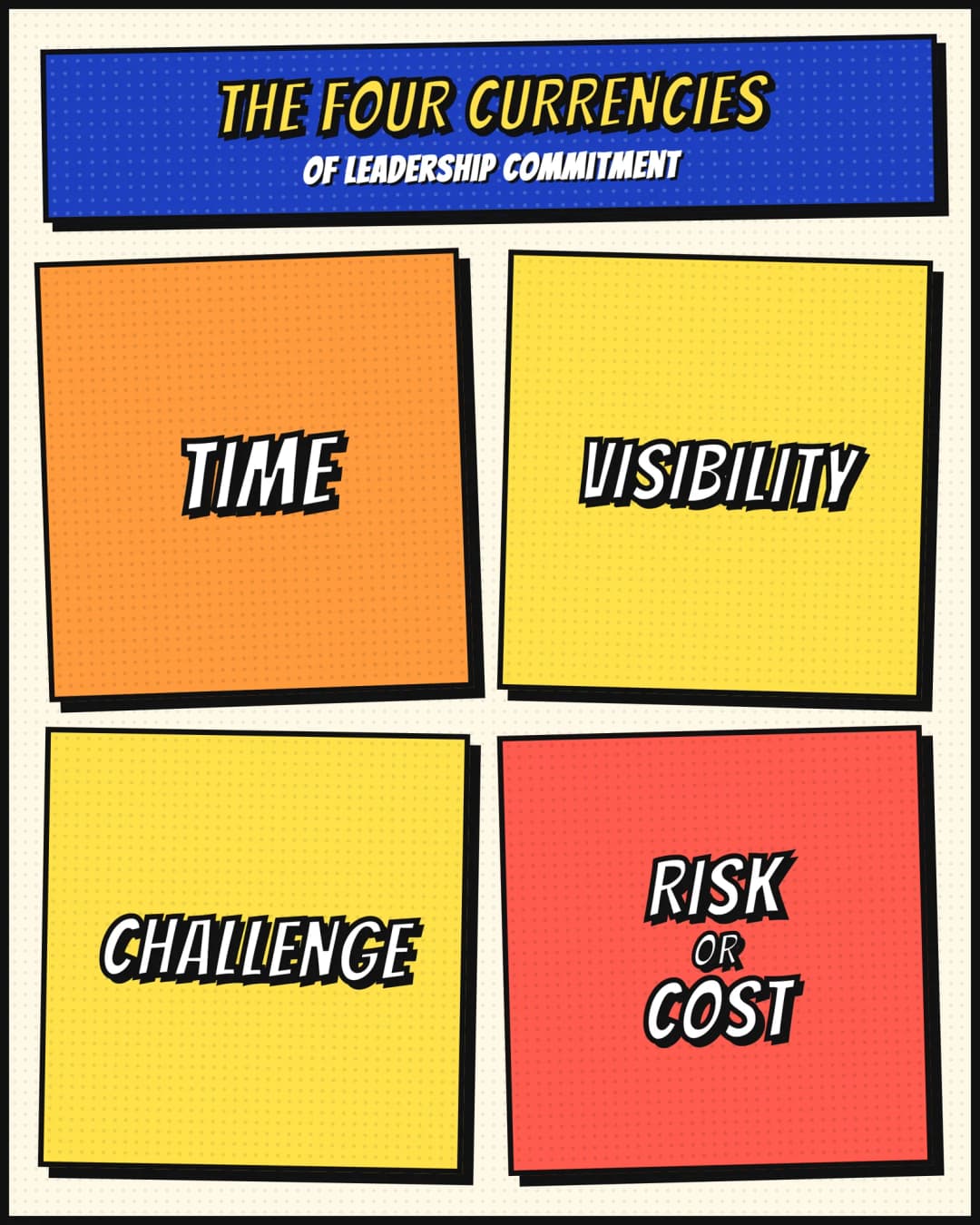
Closely related is leadership commitment. Everybody agrees it matters, and it falters anyway, because there is no shared vocabulary for what it means. We use a simple model with three levels of commitment. Most leadership teams are stuck at the middle one, which we call conditional commitment: I am in, provided it does not cost me too much. Commitment shows itself in four currencies: time, visibility, willingness to challenge, and appetite for risk or cost. The highest level almost always takes moral courage. Once a team shares a definition, it can have an honest conversation about a lack of commitment, which is otherwise the conversation nobody dares to start.
The practical tools
Finally, the practical tools. In many senior teams, modest changes to meetings have done a surprising amount to reinforce accountability and collaboration: a redesigned standing agenda, short templated departmental updates, action-, decision- and issues logs, a rolling forward plan of key events, and protected time for Team Maintenance and Reviews. There are tried and tested templates for all of these, and AI can now take on much of the administration. Two further pieces complete the toolkit. Where Exchanging Expectations and feedback have not resolved a problem, a performance conversation is needed, and our communications specialists run highly interactive training in conducting difficult conversations while keeping the relationship intact. And performance management itself is sharpened: recognising effort and behaviour before, and as well as, results; recognising people in small and unexpected ways; giving more autonomy; and aligning rewards with the strategy. That last point is not a detail. The same strategy-execution research (by Sull and Homkes, cited in Part 3 of this series) found that most companies reward past performance well, and yet still struggle to execute. The authors’ explanation is that a culture which supports execution must also recognise and reward the behaviours a strategy depends on, and most do not: past performance is two or three times more likely than a track record of collaboration to be rewarded, and only one in five managers said a colleague who hit his targets but failed to collaborate with other units would be dealt with promptly.
The core of it
Other tools can be added as a team needs them: scenario planning, horizon scanning, pre-mortems, decision-making frameworks, root cause analysis, resilience, and managing culture change in the wider organisation. But the core is what I have described here. Agree the rules, then maintain them, little and often, with honesty that arrives fast.
Next in the series: Part 5: Safe, Happy, Fast: a code of conduct that moves both dials.