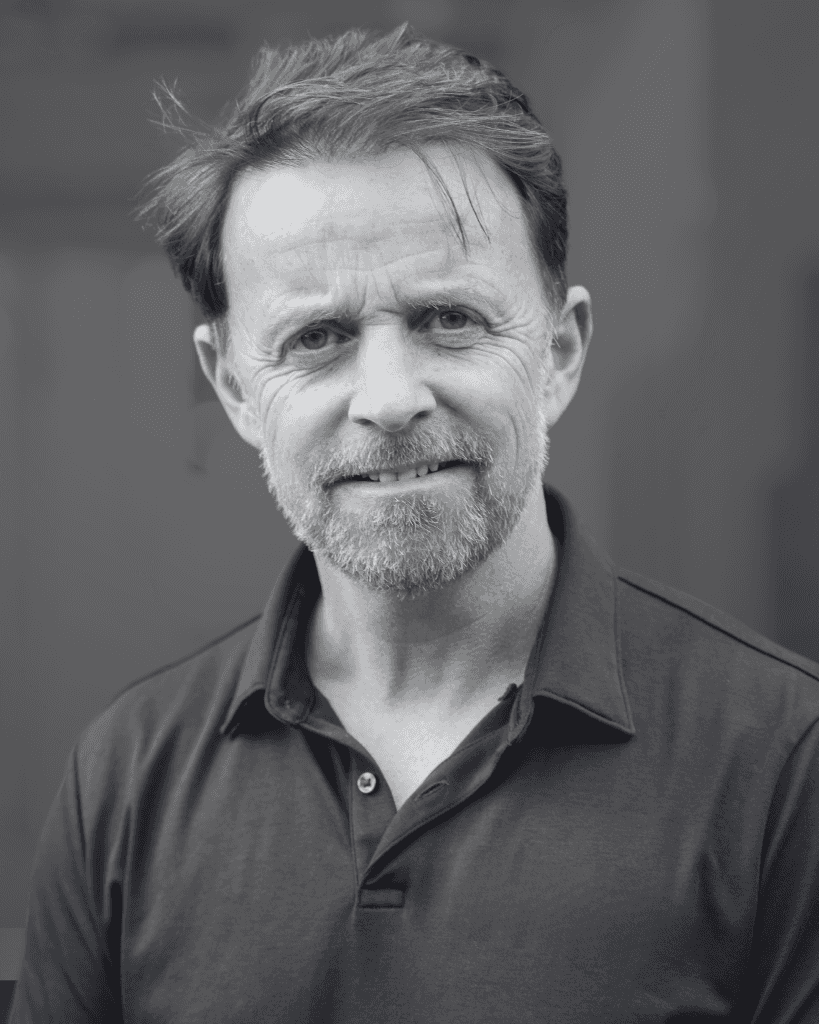



Founding Director ·
One of the ways we use COACH to sustain development — within a programme, between sessions, and long after everyone has gone back to work.
Most learning works beautifully in the room and then quietly disappears. You can almost watch it happen. People leave a good session clear about what they want to do differently, energised, occasionally a little evangelical. A fortnight later the energy has gone and the old habits have closed back over the top. Nobody did anything wrong. The learning simply had nowhere to live once the pressure of the working day returned.
I am not writing this to knock the room. In-person and virtual workshops are still the best way we know to build insight, trust and a shared language quickly, and most of Mission Performance’s work happens there. The room is where understanding gets made. The problem has never been the room. It is the weeks that follow it.
The knowing–doing gap
Behaviour changes in the moment, not in the classroom. It changes in Thursday’s difficult conversation, not in Tuesday’s workshop. That is the knowing–doing gap, and closing it means being useful across the whole arc of a programme: while it runs, in the gaps between sessions, and for months after it ends. For most of my career that was simply not affordable. Reinforcement meant more facilitator days, more coaching hours, more time away from the desk. So we ran the best programme we could and hoped it would hold. Often it held for a while, then faded, and the fade was nobody’s fault. It was just the shape of what was possible.
Artificial intelligence has changed that shape, though not in the way the headlines suggest. The rush has been to make content faster: quicker decks, instant summaries, endless microlearning. I think that misses the point. More content was never what people were short of. What is worth having is coaching in the moment. A thinking partner on hand at the exact point someone is weighing a real decision, that understands their situation and holds them to the organisation’s own standards. Reinforcement, not information. And for the first time it can be offered at a cost and scale that actually make sense.
More content was never the problem. Reinforcement was.
A closed system, never the wider web
This only works because of what the latest version of COACH has become. The first wave of AI tools would answer almost anything by reaching across the open internet, which is precisely why you could never trust them inside a serious development programme. COACH is built the other way round. It is a closed system, aligned to specific roles, contexts and use cases, and it draws only on curated specialist content and an organisation’s own approved frameworks, language and standards. Never the wider web. That single distinction matters more than any feature list. It is what allows COACH to reinforce what you actually want reinforced, rather than whatever the internet happened to say that day. It is also, to my mind, where informed AI ought to sit right now: not a general chatbot bolted onto learning, but a governed, domain-specific system with real expertise curated behind it and human judgement around it. That is the edge we are working hard to stay on.
A course you navigate
Navigator is one of the ways we put COACH to work. It is not the only one, but it is the most structured, so it is the one worth describing. Picture a course you navigate. Alongside a programme, and then well beyond it, people move through a series of short checkpoints of twenty-five or thirty minutes, each built around a situation they are genuinely facing: a negotiation next week, a piece of feedback they have been putting off, a decision they keep circling. At each checkpoint they pick up a bearing — the few things they need for what is ahead. Between checkpoints they put it to work on their own live problem, with COACH as their compass: private, patient, and available the moment it is needed. The room sets the direction. COACH and Navigator help people hold it when the ground gets rough.
Three points a workshop on its own cannot reach
Used this way, COACH cements learning at three points a workshop on its own cannot reach. Within the programme, sharpening and applying each session as it lands. Between sessions, so momentum does not drain away in the gaps. And after it finishes, when the real test arrives and the facilitator is long gone. A programme stops being an event and starts to behave like a habit. The money already spent in the room compounds instead of decaying. And because the whole thing is designed for organisations short of both time and budget, the demand it makes on any individual is small: a few private minutes with a problem that was already on their plate. Help, not homework, which is the real reason people use it.
I will not pretend Navigator is the last word on any of this. It is one deliberate answer to a world of tighter budgets, busier calendars and more fragmented attention. And since I am here: attention has fragmented, it has not shrunk to the eight seconds of the internet’s favourite goldfish, despite the number of times you have been told otherwise. The question I find worth asking is not whether the classroom survives. It will, and it should. It is what we should now ask the room to do best, and what we should hand to something that can be present in the moments a facilitator cannot. That is a division of labour worth designing on purpose rather than inheriting by accident. I would like to hear how others are thinking about it.
That is the conversation we are having with clients now. Not how to replace the rooms they value, but how to make them work far harder, for far longer. If that is useful to you, we would rather show you than tell you.
Rob Lewis is Founding Director at Mission Performance, an EMCC-accredited behavioural-change consultancy. COACH and Navigator are part of how we are responding to AI — one strand of several, all built to strengthen the work we already do rather than replace it.