



Director of Communications ·
Communication is a vital part of leadership. The way a leader behaves and communicates can impact an organisation’s messaging, relationships, culture and ultimately performance.
Inspiring, authentic leaders can set the tone.
But we should never assume that people who find themselves in leadership positions are by default great communicators. For many leaders communicating is hard and needs to be developed.
Our team is made up of performers – many of them actors. The idea of working with actors can sometimes send people in business spiralling into self-doubt. Will I be made to ‘perform’? Will I look stupid in front of my peers? However, an actor’s skillset and mindset can offer real opportunity for harnessing leader’s communication outcomes.
The tools any actor uses in their working lives are rooted to their behaviour – how they flex their voice, their physicality, their energy, to connect with and create a character that ultimately tells a story.
Whilst leaders don’t play characters (or at least they shouldn’t), they do tell stories, and those that are successful flex their communication style to ensure that the way they are communicating is appropriate for the different communication scenarios they are required to be in.

In my experience of working globally with leaders across business, those that are great communicators ask two questions – the first is, what do these people need from me in this scenario? And the second is, how do I give it to them?
That first question is about mindset and a leader’s ability to put other people at the centre of their communications. Your hierarchical position should never make you the most important person in a room.
The second question is about a skill set. How as a leader do I flex my communication style to make my communication specific to the situation and people I’m communicating with?
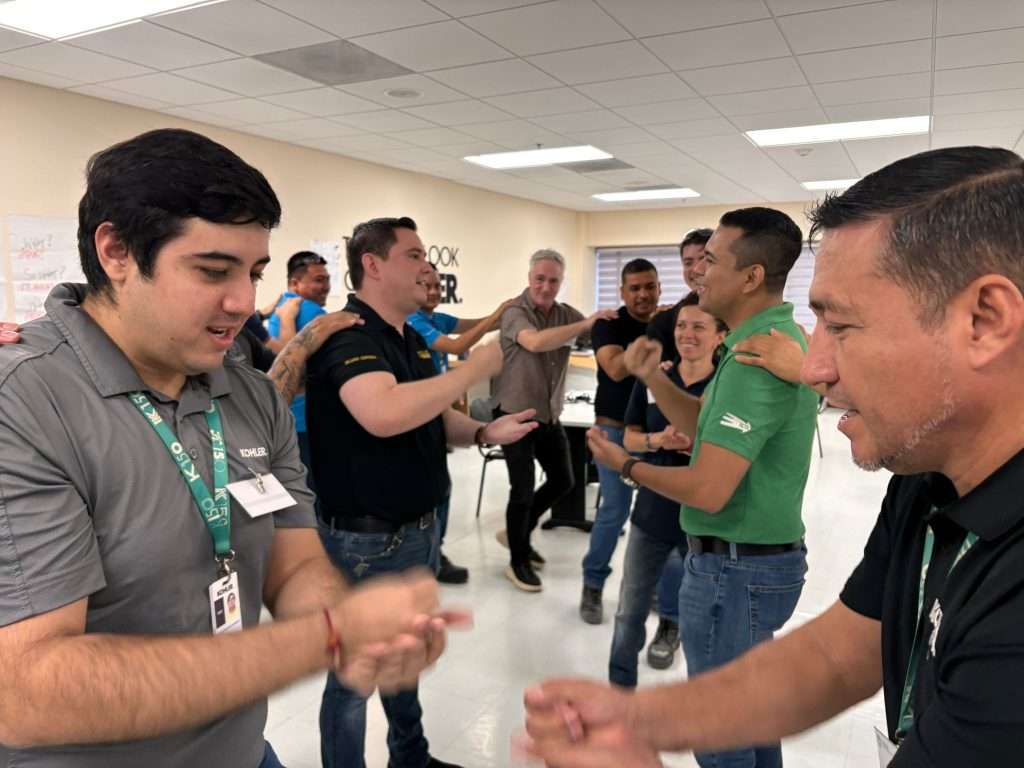
If for instance you are communicating a strategic message in front of 1000 people, your communication style will need to be different to that when communicating in a one-to-one appraisal. The communication still needs to be authentic – but appropriate to the situation.
The tools that leaders use to do this are the same as those an actor has at their disposal. How are they physically connecting to the people they’re talking to, through their gesture, eye contact, body language, how are they vocally engaging when they deliver a message?
There is no blanket way of doing this – no generic approach that is correct for every leader.
I was fortunate to attend one of the country’s most prestigious Drama Schools and train under Patsy Rodenberg who is a World Expert on connecting your voice to the words you are saying. There were 23 people in our year at drama school and Patsy’s approach to training us as actors was prescriptive and diagnostic. Each actor was different. They brought different personalities and habits.
Working with leaders is the same. You are looking to identify the things that help each of them individually in their pursuit of authenticity, and those that get in the way.
At the heart of this approach is the ability to coach – to understand the unique needs of each leader and how their communication style affects their performance.
Not all actors can do this. It’s a skill set that is developed over time and through experience and takes humility and ability to create a psychologically safe working environment. But those that are good at it bring an exciting, fresh option when developing experienced leaders and shaping the leaders of the future.
Top tips for leaders
Be authentic: flex your communication style rather than change it completely. Engaging authenticity helps build trust.
Look at each interaction independently: there is no one way to communicate that works for all scenarios
Ask the questions: w hat do these people need from me? How do I give it to them?
Use the physical and vocal tools at your disposal to put others at the centre of your communication and match your communication style to the scenario in an appropriate manner.
Interested in communications training for you and your team? Email info@missionperformance.com to discover how we can help!