
Founding Director ·
Experiential Learning: The Thread That Runs Through Everything We Do at Mission Performance
There’s a tendency in our industry to talk about experiential learning as if it’s a technique. A tool. A module you add into a programme to “increase engagement.” That’s not how I see it.
For me, experiential learning is the foundation. It’s where everything started—and it’s the standard against which everything else is judged.
Where It Began
My relationship with experiential learning didn’t start in a classroom. It started in the Royal Marines. There, leadership wasn’t taught in theory first. It was forged through experience—through the vehicle of infantry tactics. We learned how to lead by doing: planning and executing operations, day and night, under pressure, with consequences. We learned how to brief, how to make decisions, how to hold ourselves as leaders, and how to engage others in difficult situations.
All of it was experiential.
At the time, I didn’t have the language for it. But looking back, I can see how sophisticated the system was. It was built on repetition, feedback, reflection, and refinement—over and over again until standards were met. Not occasionally. Consistently.
You didn’t just “understand” leadership. You lived it.
And that stays with you.
The Shift From Experience To Design
Later, following an injury, I was posted to the Royal Naval School of Leadership and Management. That’s where something important happened.
I was able to step back from pure experience and begin to integrate it with civilian theory—leadership models, behavioural science, learning frameworks. That combination was powerful.
Because here’s the truth: experience alone is not enough.
Without structure, without reflection, without a framework to make sense of it—experience can just become activity. Busy, memorable, even enjoyable… but not necessarily developmental.
What we began to do was combine the two:
- High-quality experience
- Anchored in strong theoretical frameworks
That became the basis of the programmes we designed—four-week immersive experiences where the objective was simple: wherever someone started on the leadership curve, they left better than they arrived.
Not perfect. Better.
That philosophy has never left me.
Building Mission Performance
When Chris and I founded Mission Performance, we didn’t “adopt” experiential learning. We built the business on it.
It was the most powerful lever we had seen for changing behaviour—not just increasing knowledge, but shifting how people think, act, and lead.
Our early work reflected that.
We worked with crews preparing for global ocean races—starting with the BT Global Challenge and later the Clipper Round the World Yacht Race. These were not simulations. These were real environments, with real stakes, where leadership, teamwork, and resilience were tested daily.
We coached skippers. We developed crews. We identified what actually drove performance under pressure.
And what we found—consistently—was that the lessons people took from those environments stayed with them far longer, and ran far deeper, than anything delivered in a traditional setting.
The same applied elsewhere.
Whether it was:
- Building community projects in India
- Running global charity challenges across 47 countries in a single week
- Sailing in challenging offshore environments
- Climbing mountains in Wales
- Or competing in Arctic races to the North Pole (and winning them)
The pattern held.
Experience—properly designed and facilitated—changes people.
Why Experiential Learning Works (When Done Properly)
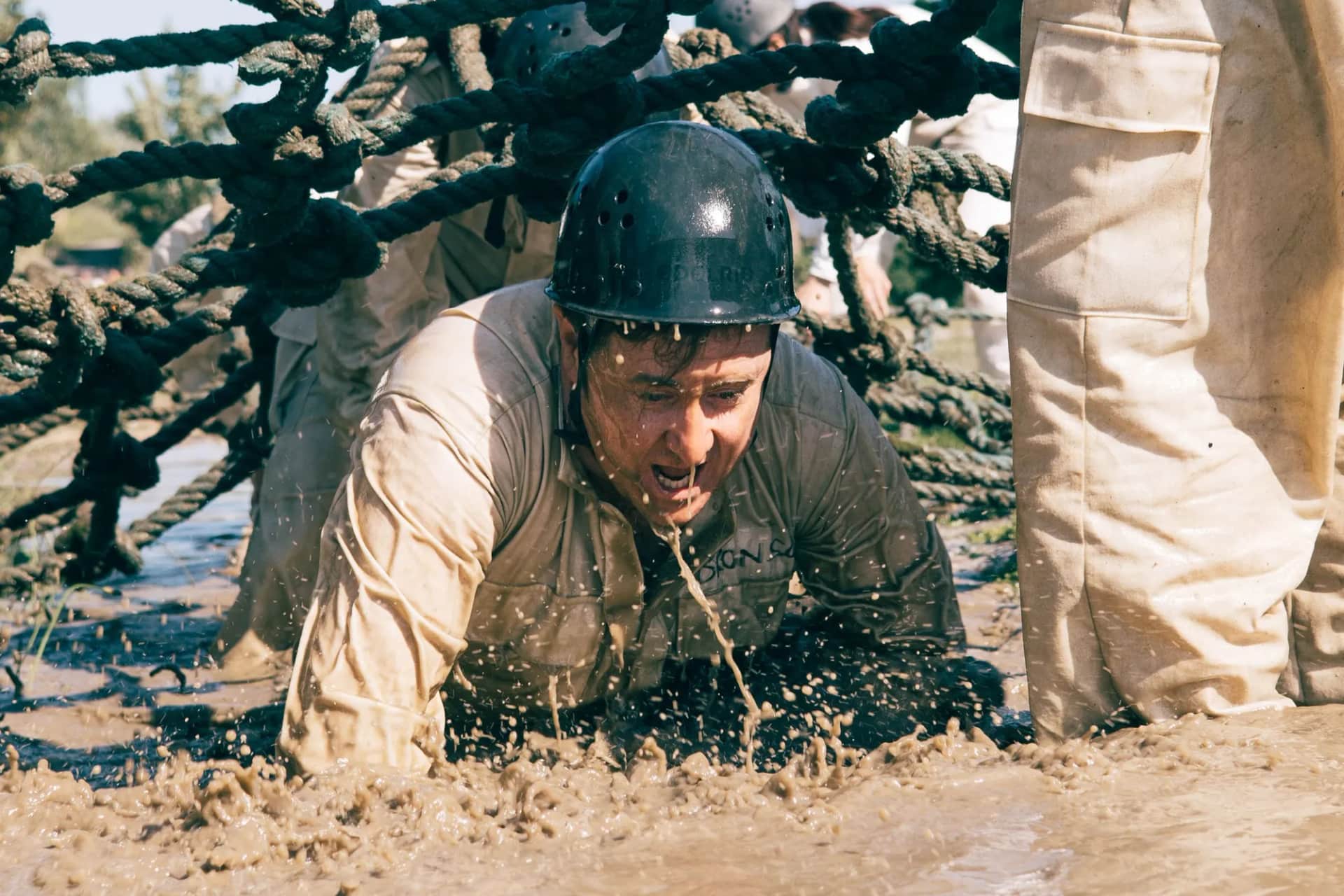
Let’s be clear: not all experiential learning is good.
There’s a lot of poorly designed “activity” out there—high energy, low impact.
The difference lies in how it’s constructed.
At Mission Performance, we’ve learned—often the hard way—that effective experiential learning must meet a set of conditions:
- It must be purposeful
The experience is not the point. The behaviour change is.
- It must be psychologically safe
People only take risks and challenge themselves when the environment allows it.
- It must be accessible
This is not about “supermen” or “superwomen.” It’s about development for everyone.
- It must be well facilitated
The experience alone doesn’t create learning. Reflection does.
- It must connect to real work
If it doesn’t translate back into the day job, it’s theatre.
- It must engage emotion
Emotion anchors memory. Memory drives behaviour.
There’s an old proverb often referenced in learning:
‘Tell me and I forget. Teach me and I may remember. Involve me and I learn.’ Benjamin Franklin
It’s overused—but fundamentally true.
People do not change because they are told something.
They change because they experience something.
The Role of Reflection
If experience is the catalyst, reflection is the engine.
This is where most programmes fall short.
Without structured reflection, the learning remains implicit. It sits beneath the surface. It’s felt, but not fully understood or applied.
Our approach has always emphasised:
- Immediate feedback
- Guided reflection
- Repetition and refinement
This is what turns experience into insight—and insight into action.
And crucially, it’s what allows individuals to develop self-awareness: how they show up, how they lead, how they respond under pressure.
That level of awareness is very difficult to achieve in purely cognitive learning environments.
Beyond The Outdoors
There’s a misconception that experiential learning is synonymous with outdoor activity.
It isn’t.
The outdoors is simply one powerful medium.
The principles we apply—challenge, reflection, feedback, repetition, emotional engagement—can be designed into any environment:
- Classrooms
- Virtual settings
- Operational simulations
- Real business scenarios
The key is not the setting. It’s the design.
We’ve run programmes in boardrooms that are just as experiential as those in mountains—because the participants are fully engaged, challenged, and required to act, reflect, and adapt in real time.
Why Organisations Come To Us
Over the past 25 years, organisations have come to Mission Performance for one reason:
They don’t just want learning. They want change.
They want people to:
- Lead differently
- Communicate more effectively
- Make better decisions under pressure
- Work together more cohesively
Experiential learning—done properly—is one of the few approaches that consistently delivers on that.
It creates:
- Clarity through action
- Confidence through practice
- Capability through repetition
And perhaps most importantly, it builds belief.
People leave not just knowing what to do—but believing they can do it.
A Broader Influence
What’s been interesting over the years is watching how this approach has been adopted more widely.
International business schools, particularly in custom executive education, have increasingly moved towards experiential models—borrowing heavily from the principles we and others have been applying in operational environments for decades.
Why?
Because the traditional model—content-heavy, experience-light—is no longer sufficient.
Senior leaders don’t need more information. They need better judgement, better awareness, and better execution.
That requires experience.
The Standard We Hold Ourselves To
We don’t claim to have perfected experiential learning. No one has.
But we do hold ourselves to a high standard.
Every programme we design is tested against a simple question: Will this change behaviour in the real world?
If the answer is no, we redesign it.
Because ultimately, that’s the only metric that matters.
Final Thought
There’s a line I’ve always believed to be true and written across the last pages of Apsley Cherry-Garrard’s book: The Worst Journey in the World
In it he said that: ‘Exploration is the physical expression of intellect.’ Following his experiences on the British Antarctic (Terra Nova) Expedition of 1910–1913.
Experience is how we test ideas, test ourselves, build relationships through shared experiences and ultimately a route to greater self-knowledge and growth.
When designed well, experiential learning creates the conditions for that exploration—safely, deliberately, and with purpose.
That’s why it has been central to everything we’ve done at Mission Performance for the past 25 years.
And it’s why, if you’re serious about changing behaviour, not just delivering training, it remains one of the most powerful tools you have.