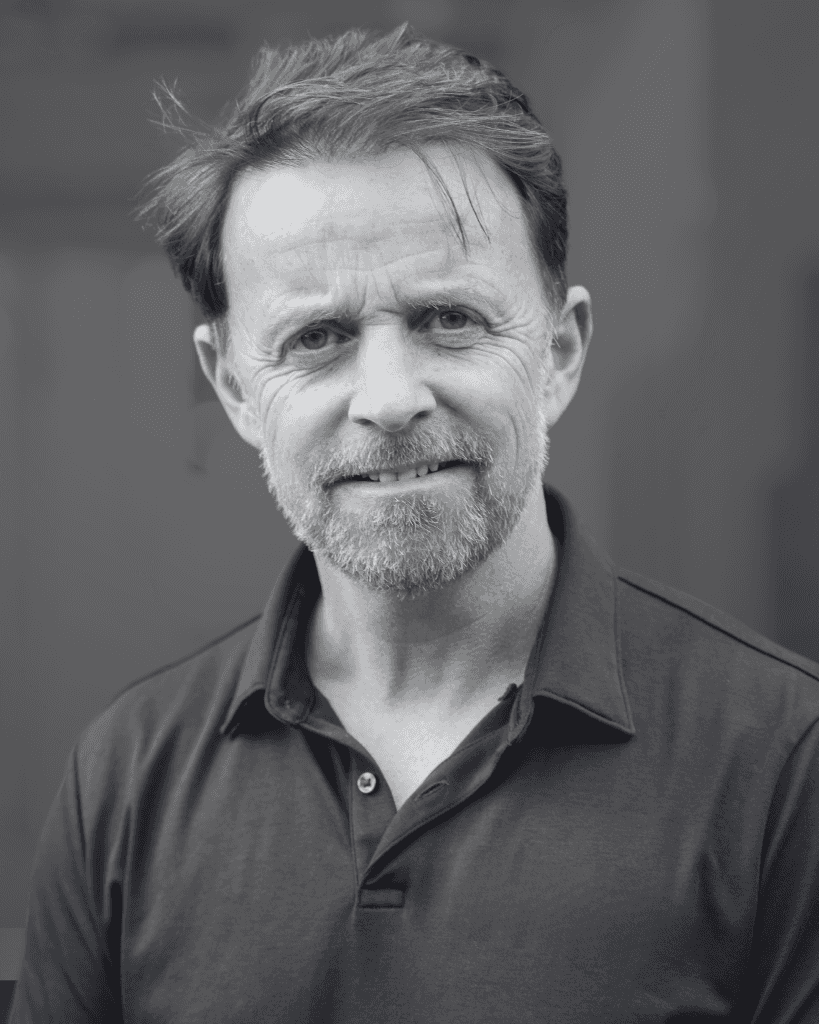



Founding Director ·
Part 5: Augmenting Your Future Workforce
Why Mission Performance has spent 25 years obsessing over programme design, and why better outcomes begin long before delivery starts.
There is a persistent myth in leadership development and organisational learning.
That the magic lies in delivery.
The charismatic facilitator.
The slick workshop.
The inspiring keynote.
The memorable away day.
Those things can matter. But they are not where outcomes are won or lost.
In my experience, after 25 years building Mission Performance, the decisive factor is usually something less visible, less glamorous, and far more important:
Design.
Because if the design is wrong, even brilliant delivery can only take you efficiently in the wrong direction.
It’s rather like long multiplication. Put the decimal point in the wrong place at the start, and everything that follows is distorted. You may work hard, move quickly, and look competent—but you still arrive at the wrong answer.
That is why we have always placed huge importance on the effective design of any development programme, whether the desired outcomes are financial, cultural, operational, or strategic.
Good design starts before solutions are discussed
One of the habits we developed early at Mission Performance was resisting the temptation to jump straight to solutions.
Many clients come with a request:
- “We need a leadership programme.”
- “Our sales teams need training.”
- “We need to improve collaboration.”
Perhaps. But perhaps not.
The first discipline of design is diagnosis. So one of our earliest questions has often been:
What is letting you know that you need our help?
That sounds simple, but it cuts through a great deal of noise.
- Is this a genuine business need?
- A symptom of something deeper?
- A performance issue masquerading as a training issue?
- An opportunity that requires acceleration rather than remediation?
We learned long ago that unless you understand the true driver, you risk treating symptoms while the cause remains untouched.
The early framework: practical, commercial, honest
In our early years, we used a pragmatic consulting framework that still influences how we think today.
We explored five core areas with clients:
1. Organisational context
What is happening in the business that could shape success or failure?
Culture, politics, history, structure, leadership climate, market pressures—these things matter.
2. Problem evidence
What evidence suggests there is a problem or opportunity?
Not anecdotes. Evidence.
3. Problem impact
What is the cost of doing nothing?
Time? Revenue? Safety? Reputation? Attrition? Strategic drift?
4. Results evidence
What would success look like—and how would we know?
Too many programmes are launched with enthusiasm and vague aspirations. We prefer precision.
5. Resources
What budget, time, sponsorship, and internal capability exist to support success?
This process helped clients sharpen their own thinking. It also ensured we focused resources on the issues most likely to generate measurable returns.
That mattered then. It matters now.
How our thinking evolved
Over time, however, we recognised something important.
Many programmes were still being designed from the learning outward:
“What content shall we teach?”
“What workshops shall we run?”
“What modules shall we create?”
That is often backwards.
So in the last decade, we integrated the work of Robert O. Brinkerhoff and his thinking around high-performance learning journeys.
This sharpened our approach considerably.
Instead of starting with learning content, we start with the business rationale. We ask:
- What strategic need is driving this programme?
- What performance outcomes must improve?
- What moments matter for the target population?
- What behaviours must change in those moments?
- Only then: what learning objectives support that change?
That sequence matters enormously.
You design backward from business value, then deliver forward through capability development.
It sounds obvious. Yet much of the learning industry still does the reverse.
Enter data: precision at scale
The biggest shift in recent years has been our embrace of modern technology, not as a gimmick, but as a design accelerator.
We developed the Gap Indicator family of diagnostics to help clients see what traditional consulting methods can miss.
Using large-scale sentiment and performance data, supported by appropriate AI and intelligent analytics, we can identify systemic gaps that hold performance back.
For example:
- In sales environments: where behaviour, confidence, process, or leadership friction is reducing conversion or margin.
- In high-reliability industries: where cultural blind spots may be undermining safety.
- In leadership systems: where trust, alignment, accountability, or execution gaps are slowing performance.
This matters because many organisations know they have a problem—but not which problem.
They feel friction. They see underperformance. They hear complaints.
But they lack precision. The Gap Indicator helps us move from assumption to evidence.
Why relationships still matter more than algorithms
Now, a warning. Data without relationship is sterile.
Technology can identify patterns, but it cannot by itself understand what it feels like to live inside an organisation.
That requires trust. Curiosity. Human judgement.
So our approach combines two forces:
Rational clarity: Data, evidence, diagnostics, trends, systemic insight.
Human understanding: Listening, interviews, observation, context, emotional tone, organisational mood
This combination is powerful.
Because often the spreadsheet tells one story, while the corridor conversation tells another.
And unless you can reconcile both, your design remains incomplete.
“What does it feel like?”
One of the most useful design questions we ask clients is not technical at all. It is simply:
What does it feel like?
What does a day in the life of the target group actually feel like?
- What pressures are they under?
- What gets in their way?
- What do they fear?
- What are they proud of?
- Where do systems frustrate effort?
- What behaviours are rewarded in reality, not on posters?
This question helps us design programmes that meet people where they are—not where leadership wishes they were. That distinction is everything.
Because development fails when it ignores lived reality.
Designing for outcomes, not theatre
There is no shortage of corporate theatre in our field.
Beautiful decks. Elegant models. Impressive launches.
But if behaviour does not change and performance does not improve, then it is expensive decoration. At Mission Performance, we have always believed that design should maximise outcomes.
Sometimes those outcomes are financial:
- Increased revenue
- Better conversion
- Higher productivity
- Lower waste
Sometimes they are non-financial:
- Stronger leadership confidence
- Better collaboration
- Improved safety culture
- Greater retention
- More trust
All are valid. All can be designed for. But only if the design process is disciplined enough to connect intervention to result.
What 25 years has taught me
If I had to summarise a quarter-century of design experience into a few truths, they would be these:
1. Never confuse activity with impact
Busy programmes can produce little value.
2. Start with business need, not learning content
Learning is the route, not the destination.
3. Context beats generic best practice
What works in one organisation can fail in another.
4. Data sharpens judgement
Used well, it reduces waste and increases precision.
5. Trust unlocks truth
Clients only share what really matters when relationships are strong.
6. Good design makes delivery easier
Poor design forces facilitators to compensate.
The future of design
We are now in a more exciting era than ever.
AI, analytics, behavioural diagnostics, continuous coaching tools, and adaptive learning technologies allow us to design with far greater sophistication than when we started.
But technology alone will not save mediocre thinking.
The future belongs to organisations that combine:
- Scientific rigour
- Human empathy
- Commercial focus
- Behavioural insight
- Courageous honesty about what is really holding performance back
That is the path we are on.
Final thought
People often notice the visible part of our work: the workshops, experiences, coaching, interventions.
Fair enough.
But the real leverage usually happened earlier—quietly, carefully, in the design room. Because outcomes are rarely accidental.
They are designed.
And after 25 years, that remains one of the strongest convictions I hold.