Founding Director ·
One of the Projects I’m Most Proud Of
Over the past 25 years, I’ve had the privilege of leading and supporting many ambitious programmes. Some were strategically important. Some were commercially significant. Some were transformational for individuals and teams. But a small number stand apart because they proved something bigger.
This was one of them.
It demonstrated that you do not need bloated budgets, sprawling consultancy armies, or endless governance theatre to create meaningful global impact. You need clarity of purpose, trust in people, disciplined execution, and the courage to organise differently.
This project remains one of the clearest examples of what can happen when leadership development, talent strategy, community purpose, and operational discipline are fused into a single mission.
The Challenge
A global operations function employing more than 8,000 people across 40+ countries wanted to achieve four objectives simultaneously:
- Build a stronger global team identity
- Engage a dispersed operational workforce
- Develop talent across multiple leadership levels
- Deliver meaningful value to local communities and charities
Most organisations would have split these into separate workstreams, budgets, committees, and years.
We did the opposite.
We designed an integrated global programme to achieve all four outcomes at once.
The Constraint That Became the Advantage
The budget was less than £12,000.
For many organisations, that would be the excuse. For us, it became the forcing function.
Scarcity often sharpens thinking. Constraints expose lazy design. When money is limited, leadership quality matters more.
So rather than buy delivery capability, we built it internally.
Rather than centralise everything, we distributed ownership.
Rather than manage through control, we led through intent.
The Design
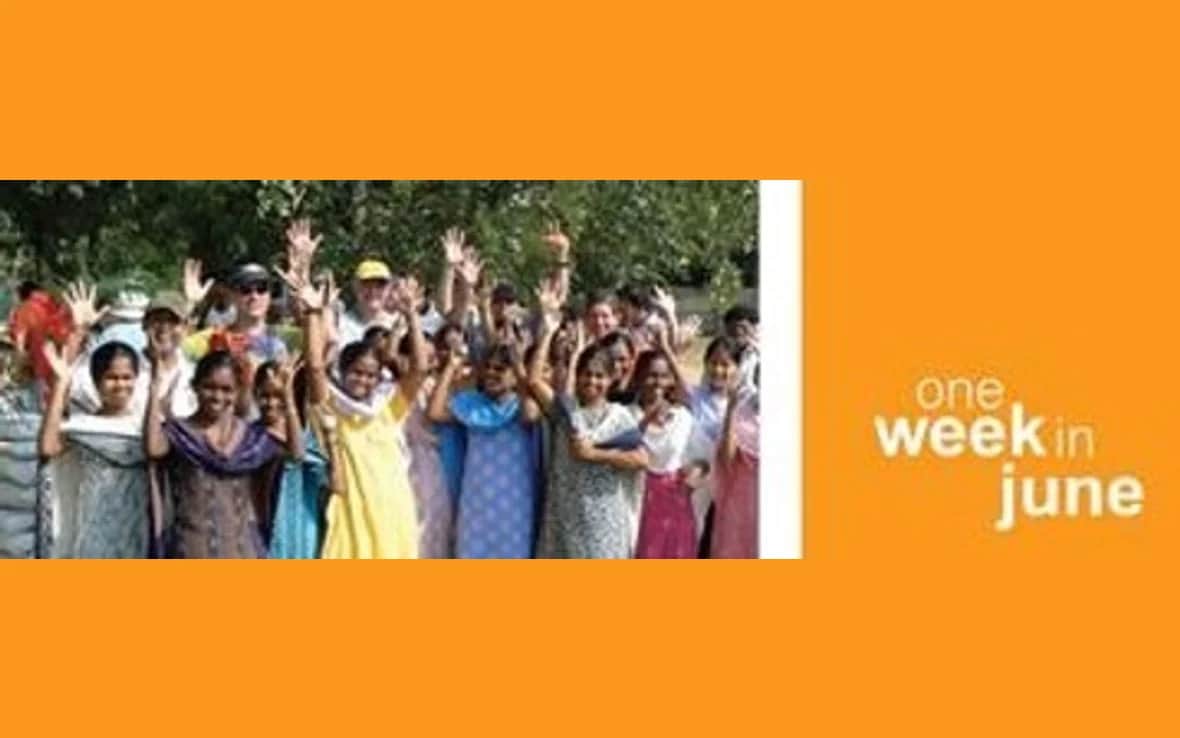
We created a global community engagement initiative delivered over one week in June.
Each country team was invited to design and execute a local project supporting either:
- Children
- The environment
- Community wellbeing
But the real architecture sat beneath the visible programme.
We used a three-tier talent model spanning different levels of seniority:
- Global Steering Team
A lean four-person core team guiding intent, governance, communications, and decision cadence.
- Regional Coordinators
Mid-to-senior leaders responsible for enabling clusters of countries, removing friction, validating plans, and coaching local leads.
- Local Country Leaders
Emerging and operational talent closest to the ground, empowered to choose causes, build teams, manage delivery, and engage colleagues.
This was deliberate.
Those closest to the problem usually know most about the solution. Too many organisations ignore that truth and pay for it in delay, cost, and disengagement.
The Leadership Method
We applied principles we still teach today:
Leader’s Intent
Rather than over-prescribe activity, we defined:
- Purpose
- Boundaries
- Standards
- Success measures
Then allowed intelligent local adaptation.
Mission Command
Decisions were pushed downward, not escalated upward.
We actively discouraged dependency behaviours and “permission culture.”
High Trust / High Accountability
Autonomy was real. So was ownership.
Simple Controls, Not Bureaucracy
We introduced only what mattered:
- Project scoping template
- Basic risk and safety assessment
- Milestones
- Fortnightly global coordination calls
- Shared communication portal for progress updates
No one needed a 78-slide governance deck.
The Delivery Engine
Once intent was clear, execution accelerated rapidly.
Regional and local leaders mobilised volunteers, selected charities, scoped activities, and built momentum in their own geographies.
The central team shifted from directing activity to enabling it.
That distinction matters.
Weak leaders stay central. Strong leaders create systems that work without them.
The Results
Over a single week:
- 43 local teams
- 50 community projects
- 40+ countries engaged
- 2,142 volunteers directly involved
- 7,539 volunteer hours contributed
- £54,276 raised for local causes
- Thousands more involved through fundraising and awareness campaigns
Commercial value of volunteered time alone exceeded £143,000.
By using internal talent rather than external intermediaries, the organisation avoided an estimated £2.11 million in equivalent fees.
On a spend of under £12,000, the return was extraordinary.
But the numbers only tell part of the story.
The Deeper Wins
Post-programme feedback showed:
- 92% intended to volunteer again
- 99% held a positive view of the organisation in the community
- 65% reported greater awareness of community investment activity
What we had really built was not an event.
We had built:
- Pride
- Connection
- Cross-border collaboration
- Leadership confidence
- Cultural cohesion
- Practical ownership
And we did it while serving communities that genuinely needed support.
Why This Still Matters
Many organisations still believe scale requires complexity.
It does not.
Many still believe leadership development happens in classrooms.
It does not.
Many still believe engagement is created through slogans and internal campaigns.
It is not.
Engagement is built when people are trusted with meaningful responsibility in pursuit of worthwhile outcomes.
That is what happened here.
Why I’m Proud of It
I’m proud of this project because it captured the essence of what we have spent 25 years building at Mission Performance.
- Practical leadership, not performative leadership
- Empowerment with standards
- Simplicity over complexity
- Talent developed through real responsibility
- Commercial discipline with human impact
- Global scale without losing local relevance
It proved that when you align mission, people, and execution, extraordinary things can happen quickly and economically.
And in truth, that lesson matters even more now than it did then.
Final Reflection
If an organisation cannot mobilise its own people to do something meaningful together, it has a leadership problem.
If it can, almost anything becomes possible.
“This was a great project to be involved in – pitched at the right level, with the right level of support. The amount of trust shown was hugely appreciated. We (UK North Regional Coordinators) are both experienced Ops Managers of some years standing, so I think we relished the opportunity to be left pretty much to it within parameters and in knowledge support would be forthcoming if required. We didn’t need to be hand-held or spoon-fed – so big thanks for not doing so! The whole project made me feel genuinely empowered, and I got a tremendous buzz from helping the Local Co-ordinators. I’m not just saying this – it was a truly memorable experience to be part of – and I feel that I played my part in making it such a success in GTS Ops North and across the globe. Thank you for the opportunity”